


Mexico’s World Cup 2026: Infrastructure Race Amid Investment Cuts
 By Adriana Alarcón | Journalist & Industry Analyst -
Thu, 06/12/2025 - 12:15
By Adriana Alarcón | Journalist & Industry Analyst -
Thu, 06/12/2025 - 12:15
With just a year to go before Mexico welcomes the world as a co-host of the FIFA World Cup 2026, excitement is building, but so are concerns. While the country’s three host cities — Mexico City, Guadalajara, and Monterrey — are moving forward with ambitious infrastructure plans, questions remain about whether these efforts will be enough, especially given a sharp decline in national infrastructure investment.
According to the Mexican Institute for Competitiveness (IMCO), while tax revenues in the 1Q25 saw a 17.8% real increase from the same period in 2024, the federal government’s infrastructure investment outside of PEMEX fell by 33.5%. This drop, from MX$147.6 billion (US$7.82 billion) in early 2024 to just MX$101.8 billion (US$5.39 billion) in 2025, has raised concerns about Mexico’s readiness to meet the logistical and operational demands of hosting the world’s largest sporting event.
Compounding the issue, public sector interest payments hit a 20-year record high, with MX$302.7 billion (US$16.03 billion) spent between January and March 2025, an 11.7% real increase from the year before. These financial strains limit flexibility for new federal infrastructure commitments at a critical time.
“Since the financial crisis in our country, we have not seen such a sharp drop in investment,” says Jorge Cano, Coordinator of the Public Spending Program, México Evalúa, to El Economista.
As a proportion of GDP, physical investment has not exceeded the 4.5% reached at the end of 2014, according to the Timely Public Finance Statistics from the SHCP. In 2024, it closed at 3.0%, and in 2023 at 2.8%.
Mexico City: Leading with Vision and Urban Renewal
Despite national budget constraints, Mexico City is forging ahead. Mexico City Mayor Clara Brugada has emphasized the tournament’s potential to enhance the capital’s global image. On Oct. 23, 2024, she established a dedicated FIFA 2026 Committee focused on logistics, mobility, and public space transformation, as previously reported by MBN.
Preparations include improving access between Banorte Stadium and major points of entry such as the Mexico City International Airport (AICM) and Felipe Ángeles International Airport (AIFA). AICM, for example, launched an MX$8 billion (US$475 million) renovation plan in May 2025, which includes terminal upgrades, improved runways, and expanded parking and security systems.
Other city-led projects include illuminated streets in the Historic Center, new cycleways like the Gran Tenochtitlan, and rehabilitated public spaces. These initiatives were designed not just for the World Cup, but to leave a long-term legacy of urban enhancement, say authorities.
The area surrounding the Banorte Stadium is also being subjected to a wide-ranging urban improvement plan. The initiative includes infrastructure upgrades, public space revitalization, sustainable housing projects, and enhanced mobility, all aimed at addressing long-standing community needs while preparing to welcome the global event. Top priorities include key water infrastructure improvements: the rehabilitation of seven water wells and the construction of three stormwater collectors — two within the neighborhood and one along Calzada de Tlalpan.
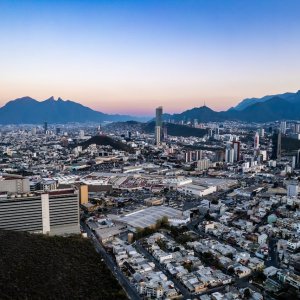
Monterrey: Building Connectivity and Capacity
In the north, Monterrey is aligning closely with FIFA standards and stakeholder collaboration across municipalities such as Guadalupe, Apodaca, and San Pedro. “We are working to ensure a seamless experience for international visitors,” says Alejandro Hütt, Host City Manager for Monterrey, to MBN.
Mobility improvements are at the core of the city’s preparations. Investments include new metro lines, eco-friendly buses, and park-and-ride systems. Key highways are being expanded or remodeled, including the airport highway and roads to Saltillo and Texas, while Monterrey International Airport plans to build a second runway.
The state is also prioritizing sustainability and water resilience. Projects include tertiary water treatment, the expansion of wastewater treatment facilities, and the construction of the second Rompepicos Dam. Public security, emergency services, and hospital capacity are also receiving upgrades, say authorities.
A unique initiative, the “FIFA Corridor,” will connect public spaces and tourist hotspots across the metropolitan area, with a focus on pedestrian, cyclist, and transit-friendly design. Monterrey’s tourism sector is also getting a boost with an US$8.74 million investment in hotels, restaurants, and cultural sites, MBN reports.
Guadalajara: Driving Innovation and Economic Opportunity
Guadalajara is approaching the World Cup as a catalyst for innovation and entrepreneurship. The city is preparing to host four matches and an estimated 1 million visitors. Montserrat Hidalgo, Host City Officer, estimates the tournament could generate between US$5 billion and US$7 billion for the local economy and create over 40,000 temporary jobs.
Events like the “Startup Building” at Universidad Autónoma de Guadalajara (UAG) are fostering innovation in urban planning, public safety, and tourism. Local startups are developing solutions such as real-time translation tools, augmented reality for tourists, crowd analytics, and sustainable hospitality services.
Guadalajara’s universities are expected to play a key role, offering live innovation labs and research hubs focused on logistics, mobility, and user experience. The goal is to leverage the World Cup not just for tourism, but to build a smarter, more resilient city.
At the same time, the state is deploying projects such as the intervention on the Chapala highway by the State Government, says Governor of Jalisco Pablo Lemus. The Municipal Government of Guadalajara is also working on the development of the FIFA Fan Festival, among other initiatives. Among the most notable projects is the rehabilitation of the Chapala highway, from Anillo Periferico to Miguel Hidalgo y Costilla International Airport, with an investment exceeding MX$2.6 billion (US$$137.65 million). The main access road for visitors arriving by air to the Guadalajara Metropolitan Area is being remodeled, featuring two side lanes per direction, sidewalks, a bike lane, and lighting, enhancing the urban landscape.
Improvements are also planned for the Minerva Roundabout, including wider sidewalks, safe crosswalks, and urban beautification, while maintaining the current number of lanes. Comprehensive work is also underway on Camino Real a Colima to ease traffic in the southern area between Tlajomulco and San Pedro Tlaquepaque.
The Jalisco Network will provide free internet access to tourists and residents in public spaces throughout Guadalajara.
Additionally, Grupo Aeroportuario del Pacífico will advance the construction of an alternate access road to Guadalajara International Airport, connecting via Adolf Horn Avenue in Tlajomulco.
You May Like





Most popular








