


Updated Presidential Candidates’ Infrastructure, Logistics Plans
 By Adriana Alarcón | Journalist & Industry Analyst -
Wed, 04/03/2024 - 08:20
By Adriana Alarcón | Journalist & Industry Analyst -
Wed, 04/03/2024 - 08:20
As the presidential debate on April 7 approaches, candidates gear up with their respective proposals for the future of infrastructure and logistics in Mexico. Here's an overview of their key proposals, shedding light on their plans to address critical issues the country faces.
Xóchitl Gálvez: Leveraging Technology and Investment for Secure Logistics
To address the surge in cargo transportation robberies on the country's highways, Gálvez emphasizes the need to leverage technology and intelligence to ensure security. She advocates for bolstering the Armed Forces' involvement in national security efforts and utilizing tools such as artificial intelligence and Big Data analysis to combat organized crime and safeguard goods in transit.
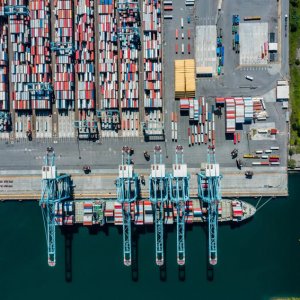
To stimulate nearshoring and foster economic development in the region, Gálvez proposes the construction of the second phase of the Port of Veracruz. This expansion aims not only to increase cargo capacity but also to improve land and rail connectivity to facilitate the flow of goods and encourage investment in the area.
The candidate pledges to enhance and expand the network of federal highways while investing in the maintenance and expansion of critical infrastructures such as the Ozuluama-Tampico highway and the Riviera Veracruzana-Boca del Río bridge. Additionally, she highlights the importance of promoting multimodal infrastructure, integrating roads, airports, railways, and ports to ensure efficient and secure transportation of passengers and goods.
Aligned with her vision of a technologically driven government, Gálvez also proposes the adoption of advanced technologies across all sectors, from healthcare and education to public security. She also commits to fostering digital inclusion and technological literacy, as well as ensuring universal internet access through the "Mis Datos" program, specifically targeting young people aged 15 to 30.
To ensure efficiency and transparency in the management of public infrastructure, Gálvez proposes establishing a collegiate body comprising citizens, entrepreneurs, and public servants for long-term national infrastructure planning. She also pledges to review ongoing infrastructure projects, guaranteeing accountability and citizen participation in decision-making processes.
Candidate Gálvez is focusing on security, business support, and fiscal responsibility, with proposals including the creation of a binational agency with the United States to strengthen control at the Mexico-US border and fight the trafficking of weapons and chemical precursors. Gálvez says that she plans to reevaluate the Texcoco airport project, which was canceled by President Andrés Manuel López Obrador, or to expand Felipe Ángeles International Airport (AIFA) to accommodate the growth in passenger traffic. Regarding congestion at the Port of Manzanillo, Gálvez says she considers it important to explore Cuyutlan as an alternative for a new port, as it presents an attractive opportunity for private sector investment.
Gálvez adds that she plans to modernize infrastructure by prioritizing investment in new roads and border crossings, while also ensuring road maintenance works. She says that her plans include investing in STEM education to capitalize on nearshoring opportunities, previously reported by MBN.
Claudia Sheinbaum: Sustainable Development and Inclusive Growth
In her bid for the presidency, Candidate Claudia Sheinbaum unveils a comprehensive plan rooted in principles of sustainability and economic inclusivity. Her proposals outline a strategic framework to attract sustainable investments, promote regional development, and address societal disparities across the nation.
In terms of investments, she emphasizes the importance of fostering cutting-edge industries that not only enhance technological capabilities but also prioritize environmental sustainability and circular economy practices. These investments, she argues, must generate fair employment opportunities, uphold labor rights, and enrich local communities.
She proposes the identification of regional strengths and the promotion of key sectors across the country. Specifically, she highlights ten industrial corridors strategically distributed across the country, each specializing in different sectors such as renewable energy, manufacturing, agribusiness, and logistics.
These corridors include:
-
The Interoceanic Corridor (CIIT): Spanning Oaxaca, Veracruz, Tabasco, and Chiapas, focusing on renewable energy, specialized manufacturing, agribusiness, and logistics
-
The AIFA Corridor: Encompassing Mexico City, the State of Mexico, and Hidalgo, with a focus on medical devices, pharmaceuticals, logistics, specialized manufacturing, services, and food and beverages
-
The Gulf Corridor: Covering Veracruz, Tabasco, Chiapas, and Campeche, prioritizing petrochemicals, hydrocarbons, timber, fruit cultivation, and fisheries
-
The Pacific Corridor: Including Nayarit, Jalisco, Colima, and Michoacan, emphasizing agribusiness, Industry 4.0, logistics, and tourism
-
The Border Corridor: Encompassing Chihuahua, Coahuila, Nuevo Leon, and Tamaulipas, focusing on automotive, manufacturing, and agribusiness sectors
-
The Baja Corridor: Spanning Baja California, Baja California Sur, Sonora, and Sinaloa, with an emphasis on semiconductors, renewable energy, tourism, and agriculture
-
The Bajio Corridor: Covering Queretaro, Guanajuato, San Luis Potosi, and Aguascalientes, specializing in automotive, data centers, aerospace, and tourism
-
The Mayan Corridor: Encompassing Yucatan, Chiapas, Tabasco, Campeche, and Quintana Roo, focusing on tourism, agribusiness, renewable energy, food and beverages, and services
-
The Central Corridor: Including Guerrero, Morelos, Puebla, and Tlaxcala, emphasizing textiles, automotive, and electrical and electronic industries
-
The Northwest Corridor: Covering Sonora, Sinaloa, Durango, and Zacatecas, prioritizing mining, agriculture, and power generation
Additionally, Sheinbaum proposes the construction of at least 100 additional industrial parks to further distribute investments and spur economic growth.
Her plan also aims to enhance Mexico's transportation infrastructure, particularly the railway system. She advocates for the expansion and modernization of the railway network to accommodate increased freight traffic, improve connectivity, and reduce transportation costs.
Sheinbaum promotes strategic investments in railway projects, including the completion of ongoing initiatives such as the Mayan Train and the CIIT. Additionally, she suggests evaluating the feasibility of new projects such as the Mexico-Tuxpan Railway Corridor and the Guadalajara-Aguascalientes Rail Link to bolster freight movement efficiency.
She emphasizes the reintroduction of passenger rail services, citing their potential to enhance connectivity, reduce travel times, and mitigate environmental impact. Proposed routes include Mexico City-Queretaro-Leon, Mexico City-Guadalajara, Mexico City-Monterrey-Nuevo Laredo, and Mexico City-Puebla-Veracruz.
Recognizing the importance of road networks in facilitating connectivity, Sheinbaum advocates for significant improvements and expansions across key regions. She proposes targeted investments in highways, focusing on areas such as Baja California, Sinaloa-Chihuahua, Sonora-Chihuahua, San Luis Potosi-Coahuila, and others. Additionally, Sheinbaum emphasizes the need to prioritize the development of rural roads to enhance accessibility and connectivity in underserved communities.
Jorge Álvarez Máynez: No Concrete Proposals
As previously reported by MBN, Candidate Jorge Álvarez Máynez has not presented concrete nor formal proposals. He has only mentioned his goals of demilitarization and public security. His strategy focuses on reducing the participation of the military in civilian tasks but a specific strategy has not been provided yet. He also expects to prioritize public security as a catalyst for economic growth.
You May Like
Most popular








