

Transportation: Driving Social Equity and Inclusion

STORY INLINE POST






 By Carlos Lecourtois | CEO & Founder -
Mon, 08/11/2025 - 07:00
By Carlos Lecourtois | CEO & Founder -
Mon, 08/11/2025 - 07:00
When we talk about transportation, the conversation often revolves around infrastructure, technology, efficiency, or innovation. However, we rarely explore its deeper social dimension, its ability to connect people to opportunities, reduce inequalities, and improve lives. At the heart of every modern city, transportation is not just a means to get from point A to point B. In many ways, it is a powerful tool for social transformation.
Urban mobility is not just a matter of convenience, it is about access. A reliable, well distributed public transportation system allows people to reach education, healthcare, jobs, culture, and basic services. When a community lacks safe and affordable mobility options, they are being denied the full exercise of their rights.
In underserved or disconnected neighborhoods, isolation reinforces cycles of poverty. A person who spends two hours commuting or a third of their monthly income on transportation is at a clear disadvantage compared to someone with better access. That's why mobility must be recognized as a matter of social equity. A city that prioritizes the movement of all its citizens builds the foundation for greater economic inclusion and improved quality of life.
The Gender Perspective
Transportation also intersects with gender inequality. Women typically make more multi stop trips, travel off-peak hours, and combine work with caregiving responsibilities. Yet most transport systems are not designed with these travel patterns in mind.
Safety is another major concern. In many cities across Latin America and beyond, sexual harassment and violence on public transport are everyday barriers. Women often avoid certain routes, stations, or hours due to fear which limits their freedom and opportunities.
A smart transport system must do more than optimize routes. It must provide well-lit, secure spaces with effective surveillance. By addressing these gaps, we create a more inclusive environment where women can move freely and safely, which in turn increases their participation in the workforce and public life.
Balanced Urban Development
Historically, cities have developed unevenly, with priority given to areas better connected by transportation. This has led to urban sprawl, gentrification, and territorial segregation. Communities without access to reliable transit are often stuck in areas with fewer job opportunities, lower quality education, and weak healthcare systems.
Mobility planning must, therefore, be aligned with urban development strategies. When transportation is treated as a structural axis of urban planning, it becomes a catalyst for inclusive growth. Well-connected zones attract investment, generate employment, and boost the local economy, ultimately making the city more balanced and resilient.
In this sense, transport is not just about movement, it’s about integration. Well-planned systems can break physical and symbolic barriers between social groups, encouraging interaction, tolerance, and coexistence.
Beyond Green: The Social Side of Sustainability
While environmental sustainability is often the focus of transport innovation, the social dimension is just as important. A transport system is only truly sustainable when it serves all people, including the elderly, people with disabilities, children, and low-income populations.
Sustainable mobility should mean more than just electrifying vehicles. It must also mean building inclusive sidewalks, creating well-connected bike lanes, ensuring barrier-free access to buses and trains, and keeping fares affordable for everyone.
Cities that embrace these principles are building fairer futures. They reduce traffic, improve air quality, and, most importantly, guarantee that no one is left behind. Mobility cannot become a luxury good; it must be protected and promoted as a basic human right.
Innovation With a Social Purpose
In recent years, the transportation industry has seen an explosion of technological innovation, mobile apps, route optimization powered by AI, autonomous vehicles, shared mobility platforms, and more. But technology alone cannot solve deep-rooted social issues. In fact, if poorly implemented, it may widen existing gaps.
For example, digital-only transport systems may exclude older adults, people without smartphones, or communities without internet access. Autonomous vehicles may promise efficiency but can create new challenges around employment or accessibility.
That’s why innovation must be inclusive by design. Technological solutions should reflect the diversity of users and their real-world contexts. They should be tested and implemented with public feedback, local data, and a clear understanding of community needs.
Real innovation is not just what’s new, it’s what works for the most people.
Inspiring Global Examples
Mexico City, one of the largest urban centers in the world, offers a compelling example of how transportation can be a tool for social integration. For decades, the city's rapid growth left behind many peripheral areas, creating zones of economic and social exclusion. In response, Mexico has made efforts to expand and modernize its transportation infrastructure, not just to reduce traffic congestion, but to bridge those divides.
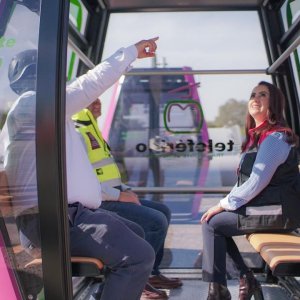
Projects such as the Cablebús have helped connect marginalized communities in the northern and eastern hills of the city with key areas of economic activity. These aerial cable cars, inspired in part by models used in South America, offer fast, safe, and affordable travel for people who previously faced long, dangerous, and exhausting commutes.
Similarly, the expansion of the Metrobus system, the city's Bus Rapid Transit (BRT), has been instrumental in creating more efficient and inclusive mobility. By dedicating exclusive lanes to high-capacity buses, the Metrobus provides a dignified alternative to chaotic and informal transit options.
These efforts reflect a broader vision: transportation as a public good that can reduce inequality, improve safety, and offer new opportunities to residents historically pushed to the margins of the city.
The Transportation Future We Need
The transportation industry is at a turning point. Faced with the realities of climate change, urban inequality, and rapid technological shifts, the challenge is not only to move faster but to move fairer. That means redefining success not by the number of kilometers of roads or the latest vehicle on the market, but by the number of lives improved and opportunities created.
To build this future, collaboration will be essential, between governments, private companies, tech startups, urban planners, and, most importantly, the people who rely on these systems every day. Transportation policy must be participatory, data-driven, and responsive to the complexities of real urban life.
The future of mobility is not just electric or autonomous. It is compassionate. It is inclusive. And it is rooted in the belief that every person, regardless of where they live or how much they earn, deserves the right to move freely, safely, and with dignity.
You May Like






Most popular








