


Mexico’s Trade Surplus, Rail Reforms, Global Supply Chain Shifts
 By Adriana Alarcón | Journalist & Industry Analyst -
Fri, 05/02/2025 - 09:00
By Adriana Alarcón | Journalist & Industry Analyst -
Fri, 05/02/2025 - 09:00
This week in logistics, Mexico shows a trade surplus amid global uncertainty due to the US tariffs, while escalating US-China tensions threaten to reshape shipping routes and global supply chains.
In other news, President Sheinbaum pushes forward with a railway reform and greenlights the freight phase of the Mayan Train, aiming to supercharge southeastern logistics. Meanwhile, construction kicks off on the Mexico-Queretaro high-speed train, promising faster travel and better urban connectivity. North of the border, Trump tightens English rules for truckers and launches a national security probe into imported trucks, signaling a tougher trade stance with potential ripple effects across North America.
Ready for more? Here is your Week in Logistics!
Mexico Reports a 9.6% Trade Surplus in March Amid Global Strains
In March, Mexico recorded a trade surplus of US$3.44 billion, driven by strong growth in non-oil exports and a reduced oil deficit, despite global uncertainty. Exports rose 9.6% year-over-year to US$55.53 billion, led by manufactured goods, especially machinery and automotive products. For 1Q25, Mexico achieved a trade surplus of US$1.1 billion, reversing a deficit from the same period in 2024. Imports grew 7.1% in March, mainly due to higher intermediate goods.
Global Trade Disrupted by Escalating US-China Tariff Dispute
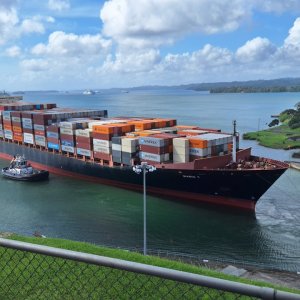
The US-China trade war has intensified, with no talks underway and steep tariffs on both sides. Global trade is feeling the impact, especially transpacific shipping, as carriers cut capacity and shift routes to Southeast Asia. China is easing some tariffs to reduce domestic strain. Businesses warn of rising costs, supply chain disruptions, and recession risks, while US import activity is already declining.
Sheinbaum Sends Rail Reform Proposal, Seeks New Transport Agency
President Claudia Sheinbaum proposed a reform to expand and modernize Mexico’s rail system, including creating the Agency for Trains and Integrated Public Transport (ATTRAPI), a new federal agency to oversee development, safety, and integration. The plan aims to improve mobility, cut emissions, and connect over 49 million people with 3,500km of new rail lines.
US Truck Drivers Must be Proficient in English: Trump
US President Donald Trump signed an executive order requiring all US commercial truck drivers to demonstrate English proficiency, reversing a 2016 policy and aiming to enhance safety and national security. The order mandates strict enforcement by the FMCSA, raising concerns amid a diverse workforce and ongoing driver shortages in the trucking industry.
US Department of Commerce Launches Section 232 Truck Probe
The US Department of Commerce has launched a national security investigation under Section 232 into imports of medium and heavy-duty trucks and parts to assess potential threats to domestic industry. The probe, backed by President Trump, could lead to trade measures like tariffs if imports are found to undermine national security or supply chain resilience.
Construction of the Mexico-Queretaro Train Begins
Construction has officially begun on the Mexico-Queretaro Train, a high-speed rail project that will cut travel time between the two cities to just two hours. The 226km double-track route will feature multiple strategic stops, connect with urban transit systems, and serve an estimated 6 million users annually. It is part of Mexico’s national railway expansion, led by SEDENA, alongside three other routes totaling 786km.
President Sheinbaum Greenlights Freight Phase of Mayan Train
President Claudia Sheinbaum has approved the development of freight infrastructure for the Mayan Train, expanding its role beyond passenger transport to become a major logistics platform in southeastern Mexico. The project, to be executed by SEDENA, includes 10 new freight facilities, will connect key ports and the Interoceanic Train, and aims to boost regional economic growth, creating over 26,200 direct jobs during its two-phase construction over the next 2.5 years.
You May Like




Most popular








