


Mexico Reaches Gasoline Price Cap Pact
 By Perla Velasco | Journalist & Industry Analyst -
Fri, 02/28/2025 - 12:54
By Perla Velasco | Journalist & Industry Analyst -
Fri, 02/28/2025 - 12:54
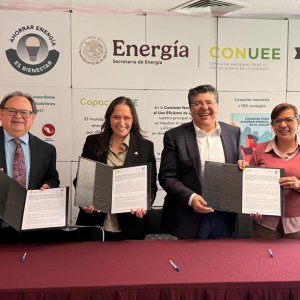
President Claudia Sheinbaum confirmed that a historic agreement has been reached with fuel station operators to voluntarily set a maximum price of MX$24/L for Magna gasoline. Coordinated by SENER, the fuel sector signed the agreement on Thursday afternoon-
The agreement will initially last for six months, after which it will be reviewed to determine whether it should be modified. Sheinbaum emphasized that participation in the agreement is voluntary. The price cap applies to gasoline with an octane rating lower than 91, specifically PEMEX’s regular Magna fuel.
The fuel retail sector was represented by the National Organization of Oil Retailers (ONEXPO). Jorge Mijares, President, ONEXPO, stated that, for now, the agreement includes businesses who source their gasoline from PEMEX.
Mijares emphasized that the agreement should be seen as a social policy initiative led by Sheinbaum, reaffirming ONEXPO’s commitment to support it. He highlighted the importance of shared efforts, stating that both businesses and the government must contribute to ensure the initiative’s success. Despite the agreement being signed, industry representatives and authorities will continue working groups to adjust its implementation.
“We reached out to all companies in the sector, from major importers and distributors to the owners of fuel retail stations, to engage in discussions that led to the National Strategy to Stabilize Gasoline Prices. We will continue working with the industry to ensure fair profits without impacting household finances,” shared Luz Elena González, Minister of Energy.
This initiative aligns with MORENA's long-standing agenda, dating back to Andrés Manuel López Obrador's administration, which prioritized fuel self-sufficiency, refinery system investments, and maintaining low gasoline prices. Geopolitical factors, such as high oil prices and supply disruptions, however, have posed challenges to achieve “fair” gasoline prices.
Earlier in February, as the initiative was being discussed, undisclosed sources close to the negotiation discussed that the price cap could lead to unintended consequences. Smaller fuel stations may struggle to operate under these conditions, while larger fuel groups could expand by acquiring struggling independent stations. Additionally, concerns exist that the cap may encourage the use of lower-quality fuel blends or fuel adulteration, as stations attempt to cut costs. The risk of illegal fuel markets growing also remains a possibility.
When asked whether the government would consider reducing the IEPS tax to ease financial strain, sources dismissed the idea. Instead, the administration is expected to adjust the IEPS subsidy on a weekly basis, allowing PEMEX to offer lower prices to service stations.
MORENA’s Energy Vision
Sheinbaum's government has reaffirmed its commitment to continuing the Fourth Transformation’s energy policies. This comes amid challenges such as the launch of the Dos Bocas refinery, ongoing rehabilitation of the national refining system, and the financial burden of sustaining high subsidies on the IEPS gasoline tax.
You May Like




Most popular








