Entry Into Embassy Would Breach International Law: Sheinbaum
 By Paloma Duran | Journalist and Industry Analyst -
Tue, 11/25/2025 - 13:56
By Paloma Duran | Journalist and Industry Analyst -
Tue, 11/25/2025 - 13:56
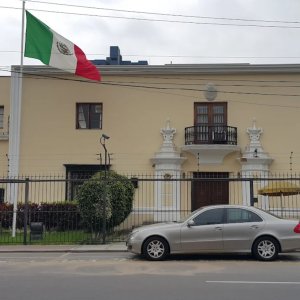
Peru’s Interim President, José Jerí, stated that if it becomes necessary to enter the Mexican Embassy in Lima to detain former minister Betssy Chávez, who is facing charges related to the failed coup attempt by ex-president Pedro Castillo, it will be done. Responding to Jerí’s remarks, President Claudia Sheinbaum stated that Chávez has a “right to asylum recognized under international human rights law” and that violating it “would be very serious.”
Chávez has been staying in the Mexican Embassy for nearly three weeks after Mexico granted her political asylum. She is awaiting Peru’s approval of a safe-conduct document that would allow her to travel to Mexico.
“We will not make a statement yet, because we consider that a principle has been misinterpreted, and clearly, we need to express our country’s discomfort over the misuse of political asylum. It is neither a yes nor a no on the safe-conduct. I will take the time necessary, because international commitments exist and we will honor them in due course,” said Jeri.
Last Friday, a Peruvian court issued an international arrest warrant and ordered five months of preventive detention for Chávez. The judge cited a “palpable” risk of flight due to her absence from biometric registration and court hearings.
Regarding potential international backlash if Peruvian authorities enter the embassy, Jerí asserted he is undeterred. “I will not allow this. I may be 39 years old, but I know what I must do and I consider it carefully. I have no fear when making decisions.”
Mexico–Peru Relations Remain Strained Amid Asylum Dispute
Diplomatic tensions between Mexico and Peru continue to escalate. Relations officially broke down in early November after Mexico granted political asylum to Betssy Chávez. Mexican President Claudia Sheinbaum, who was declared persona non grata by the Peruvian Congress for “interference in internal affairs,” emphasized that the protection afforded to Chávez is an international right.
Sheinbaum has repeatedly criticized Peru’s decision to sever diplomatic ties and stressed that any entry into the embassy would violate international conventions. “We can have differences, but always within the framework of international law,” she said. “Dialogue is always the best approach. They decided to break relations with Mexico, but any intervention in the embassy would be completely outside the norms.”
She also recalled the 2024 raid on Mexico’s embassy by Ecuadorian police, another politically charged incident that led Mexico to sever ties with Ecuador.
Jerí has denied any political persecution in his country and stressed that no former president is being detained, referring to Pedro Castillo. “I understand that people may speak nonsense as part of a political defense rather than a legal one. People already know who is who,” he said.
The relationship between Mexico and Peru remains fragile following the Castillo crisis. Former Mexican President López Obrador had consistently claimed that Castillo’s removal was a right-wing coup and, in defending him, refused to recognize Boluarte’s government, calling it illegitimate. In response, the Peruvian Congress declared López Obrador persona non grata. The approach taken by Sheinbaum and Jerí, following the precedent of their predecessors, has further weakened the ties between the two nations.
You May Like






Most popular