A Roadmap for Nearshoring Investment in Mexico’s Chip Sector




STORY INLINE POST




 By Eugenio MarÍn | CEO -
Tue, 08/13/2024 - 14:00
By Eugenio MarÍn | CEO -
Tue, 08/13/2024 - 14:00
With the objective of identifying market opportunities, conditions and requirements to be met by companies and regions seeking to enter or expand their role in Mexico within the North American semiconductor supply chain, the United States-Mexico Foundation for Science (FUMEC) and the United States Agency for International Development (USAID), presented the MNSR: Semiconductor Nearshoring Opportunities in Mexico.
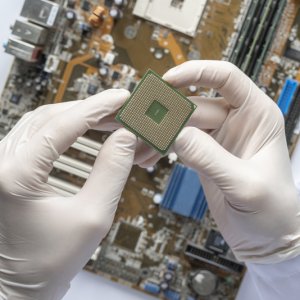
Semiconductors (SC) represent a strategic sector of great economic and security relevance in the world, as they are essential components of most manufactured products.
The SC industry is growing every year as a cornerstone of the global economy. Its revenues are expected to exceed US$720 billion by 2024 and reach US$1.2 trillion by 2029.
In that sense, the MNSR, developed with support from USAID, represents an initial effort to realistically aspire to play a significant role in the North American SC supply chain, as well as serving as a reference for public and private sector leaders seeking to formulate actions and policies that promote nearshoring investment in Mexico's SC sector.
Within the Western Hemisphere, Mexico possesses the necessary conditions and capabilities to assume a leadership role in the SC supply chain, such as geographic proximity to the United States, significant demand for integrated circuits or microchips in key sectors, such as electronics manufacturing, automotive and medical devices, as well as the presence of high-tech companies that are already part of the SC value chain.
However, this growth is highly dependent on the stability of the supply chain, which must be more secure, resilient and diversified, ensuring the availability of materials, technological facilities and skilled talent.
In addition, Mexico's triple helix (government, private sector, academia) needs to develop a short- and medium-term strategy to mitigate risks and vulnerabilities in the supply chain, as well as to create the necessary conditions to attract and retain investments that will turn Mexican companies into reliable, long-term partners in regional SC production.
Based on extensive data collection, interviews and workshops, the roadmap describes the global semiconductor supply chain, its structure in North America and Mexico's role in the latter; it states public policy proposals and private sector actions in six key areas that promote Mexico's potential to receive SC nearshoring investment that would increase its role in the sector, with a special focus on 12 Mexican state governments: six prospective states (which are already part of the value chain) and six potential states (which have characteristics that would allow them to be part of the value chain).
The main elements of the MNSR action plans include infrastructure, supply chain, workforce, innovation, entrepreneurship and sustainability.
In particular, it is observed that there is an opportunity in the area of assembly, testing and packaging (ATP) in Mexico, services that represent 12% of added value within the chip, for which a company would require an investment of between US$2 million and US$5 million dollars. Another opportunity is chip design with focus on mature nodes, representing 32% of added value within the chip and initial operational investments
between US$200 thousand and US$1 million.
There is a key capacity in Mexico and a unique opportunity to strengthen the value chain in North America for which it is necessary to create a regional support infrastructure, industrial parks, improve roads, water supply, and clean energy.
In addition, it is a priority to attract international companies that are oriented to the SC value chain, as well as to identify sources of gases, minerals and chemicals, and implement processes to refine them to a high level of purity as required by the industry.
In terms of workforce development, it is necessary to collaborate with the private sector to develop a critical mass of talent aligned with the industry at all levels, from technicians, engineers, scientists and personnel already working in SC companies or related companies, as well as to take advantage of international collaborations.
In terms of innovation, the sector needs to be supported in R&D tasks with the availability of laboratories, clean rooms, specific software licenses for the development of the SC sector and with a funding plan that allows them to keep these facilities at their peak performance.
In addition, it is necessary to promote technology transfer among companies within the ecosystem, as well as to establish governance standards so that those follow industry guidelines and protection of intellectual property.
In terms of sustainability, it is important to promote the establishment of public or private facilities for recycling, circularity of materials used by the SC sector and increase the availability of clean energy and water treatment plants. It is also necessary to disseminate future plans for new infrastructure in these same areas, so that companies can properly plan their establishment or expansion in a specific region.
In order for Mexico to be successful in the SC sector, interstate cooperation is required and with it the sharing of best practices and programs that exist and that will allow the creation of an integrated country offer.
To access the full report, visit: www.fumec.org/semiconductors
(In collaboration with Carlos Meneses and Leticia Mandujano)
You May Like








Most popular