


Formula E, DHL Renew Sustainable Logistics Partnership
 By Duncan Randall | Journalist & Industry Analyst -
Tue, 01/06/2026 - 11:15
By Duncan Randall | Journalist & Industry Analyst -
Tue, 01/06/2026 - 11:15
Ahead of the 2026 Hankook Mexico City E-Prix, scheduled for Jan. 10, DHL and the ABB FIA Formula E World Championship reaffirmed their sustainability-focused logistics partnership for a 12th consecutive season. The announcement was made at a news conference at the Autódromo Hermanos Rodríguez, featuring Erik Meade, CEO, DHL Forwarding Latin America, and Georgina Sánchez-Baca, Regional Senior Partnership Sales Manager for Mexico, Formula E.
Since Formula E’s inaugural season, DHL has supported the all-electric series across more than 140 races in 33 cities and 24 countries, managing the complex logistics required to move a global championship calendar. “DHL was one of the first brands to believe in this project, not just as an idea, but as something that would change motorsports,” Sánchez-Baca says.
Each Formula E race requires the transport of over 400 metric t of freight, including race cars, high-voltage batteries, broadcast equipment, track infrastructure, tires, and full charging units. “What we do is work with companies that are experts in regulation, and we make sure everything we move by air meets those requirements,” Meade says. “We have internal experts, but we also carry out external evaluations, especially for the handling of batteries and other dangerous goods.”
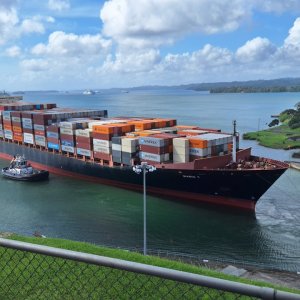
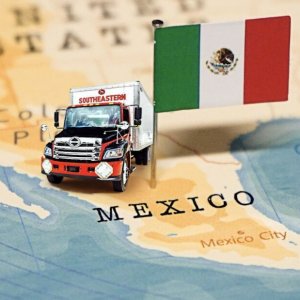
The 2025-26 season will feature 17 races in 11 cities, making it one of the most active calendars in Formula E history. Organizers say the schedule has been designed to reduce travel distances between venues, lowering emissions associated with transporting cars, batteries, and infrastructure. In addition, the initial shipment of equipment for the season will move from Brazil to Mexico by sea before continuing to Miami by road, a route intended to reduce emissions while improving operational efficiency.
According to Sánchez-Baca, the Mexico City E-Prix draws the largest crowds on the calendar, with more than 40,000 spectators. The Mexico City race carries additional significance this season, as it will mark the 150th race in Formula E history.
Collaboration with DHL on sustainable logistics measures is not new for the ABB FIA Formula E World Championship. In 2024, the series announced it had worked with DHL to reduce the carbon footprint of its global logistics operations by shipping essential equipment to races outside the European Union using two cargo planes instead of three. According to DHL, the change reduced championship-related emissions by about 5,500 metric tons of CO2 across a 16-race calendar.
The improvement was achieved by reducing freight volumes by over 80 metric t and increasing the use of in-market assets, as well as deploying multiple sets of equipment that can be moved by sea or road rather than air. From Season 6 onward, road transport for these assets has relied on renewable biofuels, which have gradually been integrated into the series maritime transport operations. These changes have delivered up to an 80% reduction in emissions compared with conventional fuels used in those sectors. In 2024, the partnership also tested Sustainable Aviation Fuel (SAF) through DHL’s GoGreen Plus service.
Julia Palle, Vice President of Sustainability, Formula E, says the freight changes reflect the championship’s broader strategy. “We are proud to take our sustainability credentials and commitment to reducing our overall emissions to the next level,” Palle says. She adds that close collaboration with DHL has contributed directly to the series’ Science Based Targets initiative commitment to cut its overall carbon footprint by 45% by 2030, using Season 5 as a baseline.
Formula E: A Global Leader fo Sustainability Within Sports
In 2024, Formula E became the first sport to commit to the British Standards Institution’s Net Zero Pathway. The championship uses ISO 14064-1 standards to quantify and report greenhouse gas emissions and applies ISO Net Zero Guidelines to support emissions reduction and reporting.
Since its inaugural season, the electric racing series has focused on measuring, reducing, and offsetting its environmental impact as part of its commitment to net zero carbon. As a signatory to the UN Climate Neutral Now initiative, Formula E began by measuring its full carbon footprint using a lifecycle assessment model that covers all race operations and headquarters activities. Annual assessments track greenhouse gas emissions, identify key sources of environmental impact and inform operational improvements.
Following several seasons of detailed measurement, Formula E set formal emissions-reduction targets in 2021 and became the first sport to have its goals validated by the Science Based Targets initiative. The championship committed to cutting absolute Scope 1 and 2 emissions by 60% by 2030 from a Season 5 baseline, and to reducing Scope 3 emissions by 27.5% over the same period. Together, these targets amount to a 45% absolute emissions reduction by 2030, aligned with limiting global warming to 1.5° C. In Season 9, Scope 3 emissions — primarily from freight, travel and car production — accounted for 98% of the championship’s footprint, while Scope 1 emissions represented 1.3% and Scope 2 accounted for 0.7%.
To address remaining emissions, Formula E began offsetting unavoidable emissions in Season 6 by investing in renewable energy projects in race markets. These initiatives support local economic development while contributing to emissions neutrality. In Season 9, Formula E further strengthened its environmental framework by aligning with PAS 2060, becoming the first global sports organization to meet the international specification for demonstrating carbon neutrality.
You May Like


Most popular







