


Mexico Presents NDC 3.0 at COP30 as PEMEX Emissions Climb 15%
 By Duncan Randall | Journalist & Industry Analyst -
Thu, 11/13/2025 - 17:58
By Duncan Randall | Journalist & Industry Analyst -
Thu, 11/13/2025 - 17:58
This week in sustainability news: Mexico is presenting its updated Nationally Determined Contribution (NDC 3.0) at the COP30 summit in Belem, Brazil. Meanwhile, PEMEX reported a second consecutive quarterly increase in carbon emissions, releasing 16.5 million metric tons of CO₂ equivalent (MMt CO₂e) between July and September 2025 — a 15.4% year-on-year rise.
In other developments, Transition Industries LLC and Mitsubishi Gas Chemical Company (MGC) signed a letter of intent for a long-term methanol supply agreement linked to Pacífico Mexinol, a large-scale methanol production facility planned for northern Sinaloa.
More news below:
Mexico to Reveal New Climate Targets at COP30 with NDC 3.0
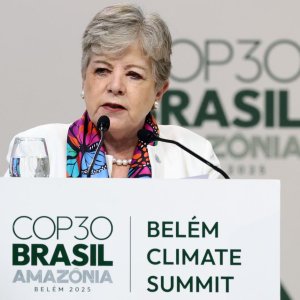
Mexico will unveil its updated Nationally Determined Contribution (NDC 3.0) at COP30, set for Nov. 10–21 in Belem, Brazil, pledging to cut between 364 and 404 million metric tons of CO₂ equivalent (MtCO₂e) by 2035. While the plan signals a higher level of climate ambition, experts warn that Mexico’s fiscal and energy policies, which are boosting funds for state oil and electricity companies while cutting funds for environmental ministries, could undermine its implementation.
PEMEX Emissions Jump 15.4% in 3Q25, Highest in Three Years
PEMEX reported a second consecutive quarterly increase in carbon emissions, reaching its highest pollution levels in nearly three years and renewing concerns over the company’s environmental performance and investment priorities. According to its latest quarterly report, the state-owned oil company emitted 16.5 million metric tons of carbon dioxide equivalent (MMt CO₂e) between July and September 2025, up 15.4% year-on-year. The increase follows a 20.7% rise in the previous quarter, when emissions reached 17.5 million tons — confirming an upward trend not seen since 2021.
Transition, MGC Sign Methanol Deal for Sinaloa Project
Transition Industries LLC and Mitsubishi Gas Chemical Company (MGC) have signed a letter of intent for a long-term methanol supply agreement tied to Pacífico Mexinol, a large-scale methanol production facility planned for northern Sinaloa. The plant, to be built in Paredones, Ahome, will have a projected annual capacity of 2.1 million tons, making it one of the world’s largest producers of ultra-low-carbon methanol. The project represents one of the largest investments in Sinaloa’s history, estimated at more than US$3.3 billion.
Brazil Unveils Climate Finance Roadmap Ahead of COP30
Brazil, host of the upcoming COP30, has unveiled a roadmap to raise US$1.3 trillion a year by 2035 to help developing countries address the impacts of climate change. At COP29 in Baku, Azerbaijan, developed nations committed in the final document to providing US$300 billion per year through 2035 to help less developed countries tackle climate change. This goal, known as the New Collective Quantified Goal (NCQG), also includes a broader target: it calls on all actors to work toward mobilizing US$1.3 trillion in international climate finance over the same period—an amount that specialists say is much closer to what developing countries need.
Mexico Restricts Older Diesel Truck Imports, Targets 90% Cut
The Mexican government has introduced new environmental regulations restricting the importation of used diesel vehicles weighing more than 3,857 kilograms, setting a maximum engine age of 10 years. The measure, published in the Diario Oficial de la Federación (DOF), aims to reduce greenhouse gas emissions, modernize the national vehicle fleet, and improve road safety.
Ellen MacArthur Foundation Unveils 2030 Plastics Agenda
The Ellen MacArthur Foundation launched the 2030 Plastics Agenda for Business, a new five-year action plan urging companies to accelerate collective efforts to eliminate plastic waste and advance a circular economy. The new framework builds on a decade of progress from the Global Commitment initiative, launched in 2018 by the Ellen MacArthur Foundation and the UN Environment Programme. The initiative has been supported by companies representing about 20% of the global plastic packaging market, which have collectively avoided 14Mt of virgin plastic.
You May Like





Most popular








