

The 'Soup or Meat' Dilemma in Energy Transition




STORY INLINE POST




 By Karla Cedano | Head of Innovation and Futures Lab -
Fri, 01/09/2026 - 06:30
By Karla Cedano | Head of Innovation and Futures Lab -
Fri, 01/09/2026 - 06:30
In one of my first jobs, a supervisor asked me a seemingly trivial question: “What do you prefer, soup or meat?” I remember hesitating, not because I wasn’t hungry, but because the question contained a trap. Choosing one option meant giving up the other. Accepting the framework implied that the possibilities were mutually exclusive. Over time, I came to understand that many of the decisions we face — in daily life, in public policy, and in the energy sector — are constructed in the same way: as false dilemmas that force us to choose, when what is truly transformative is asking how to find solutions that allow us to select both.
Something very similar occurs when we talk about energy transitions. Too often, the debate is framed as an either-or: either energy efficiency or renewable energy. Either reduce consumption or generate clean energy. Trapped in this logic of exclusion, we lose sight of the fact that the energy transition not only requires both approaches but is strengthened precisely when they are designed together, in an integrated, conscious, and socially situated way.
Energy efficiency is frequently overlooked in public discussions about energy. Perhaps because it isn’t flashy, because it isn’t visible, because it isn’t inaugurated with ribbons or speeches. Yet energy efficiency is almost always the first — and most democratic — step toward energy justice. Being efficient means doing more, or at least the same, with less. It entails reducing waste, costs, and emissions while also easing economic burdens, particularly for those who spend an unfair share of their income on the energy they need to live with dignity.
Energy efficiency begins long before we turn on a light or plug in an appliance. It starts with how buildings are designed, when bioclimatic considerations are taken into account — or ignored. Building orientation, construction materials, window size and placement, ceiling height, and cross-ventilation are not aesthetic choices; they are energy decisions. A well-designed building can capture solar heat in winter and protect itself from it in summer. It can remain cool without air conditioning and warm without excessive heating. All of this happens at the intersection of the behavior of those who inhabit spaces, the physical behavior of buildings, and the surrounding environment.
Passive strategies for achieving thermal comfort are a lesson in technological humility. Evaporative cooling, adequate thermal insulation, materials with thermal inertia, thick walls, interior courtyards, and high ceilings existed long before electricity became ubiquitous. Recovering them is not an act of nostalgia, but of energy intelligence. In many climates, these strategies significantly reduce the energy demand associated with heating and cooling, with clear economic, environmental, and social benefits.
The efficiency of electrical and electronic equipment strengthens this foundation. Refrigerators, lighting systems, pumps, motors, computers, and industrial machinery shape everyday energy consumption. Choosing efficient equipment is not a privilege, it is an investment that pays for itself over time. However, for this choice to be truly equitable, it must be supported by public policy, accessible financing, and clear information, so that all people and organizations — not just a select few — can benefit.
Yet, energy efficiency alone is not enough. Here lies the other side of the false dilemma: renewable energy generation. Reducing demand is essential, but so is transforming how we produce the energy we still need. In this regard, solar energy holds a strategic position, not only because of its abundance but because of its versatility and potential across sectors.
Solar thermal energy, used for heat generation, is one of the most mature — and paradoxically most underestimated — technologies. Its application goes far beyond domestic water heating. In businesses, hospitals, hotels, laundries, and sports facilities, solar thermal systems can supply a substantial share of heat demand cleanly and economically. Its relevance is even greater in manufacturing and other heat-intensive sectors.
Industrial processes requiring low- or medium-temperature heat, such as those in the food, textile, paper, chemical, pharmaceutical, metalworking, and construction materials industries, can integrate solar thermal systems to preheat water, generate steam, wash, dry, or support continuous thermal processes. Even in sectors often labeled as “heavy,” solar heat can be incorporated into specific stages of production, reducing fossil fuel use and associated emissions. Overlooking this potential means missing a crucial opportunity to decarbonize one of the most energy-intensive sectors of the global economy.
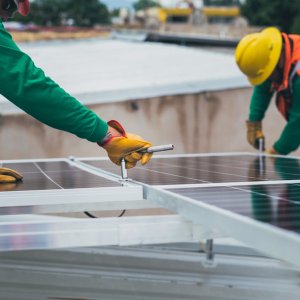
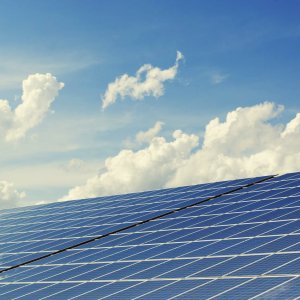
At the same time, solar photovoltaic energy has evolved from a technological curiosity into a viable solution at multiple scales. In small businesses — shops, bakeries, workshops — photovoltaic systems can cover a significant portion of daily electricity needs. In small and medium-sized industries, such as agricultural packing plants, food-processing facilities, and light manufacturing, on-site solar generation can be directly integrated into production processes, thereby reducing dependence on the grid and enhancing energy resilience. In large industries, rooftop or adjacent solar installations are increasingly used to stabilize costs, reduce energy risks, and support more ambitious environmental commitments.
The central point is this: the real strength of the energy transition lies not in choosing between efficiency and renewables, but in combining them. An inefficient building covered in solar panels remains a waste of resources. Likewise, a highly efficient system powered exclusively by fossil fuels stays locked into an unjust and environmentally unsustainable model. Energy justice emerges when unnecessary demand is reduced first, and the remaining demand is then met with clean, local, renewable sources.
Returning to that initial question, perhaps it should never have been “soup or meat?” but “How do we design a menu that nourishes us better?” The same applies to energy. It is not about choosing a single path, but about recognizing that sustainability, equity, and well-being are built by addition, not exclusion. Energy efficiency and renewable energy do not compete; they depend on each other. Only by rejecting false dilemmas can we move toward truly just energy transformations.
You May Like




Most popular







