


Volaris Tops CO₂ Efficiency in Mexico, 4th Worldwide
 By Duncan Randall | Journalist & Industry Analyst -
Wed, 07/23/2025 - 12:07
By Duncan Randall | Journalist & Industry Analyst -
Wed, 07/23/2025 - 12:07
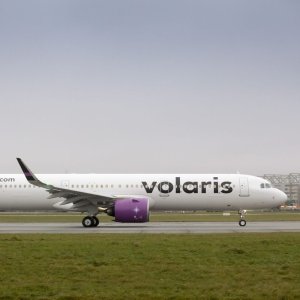
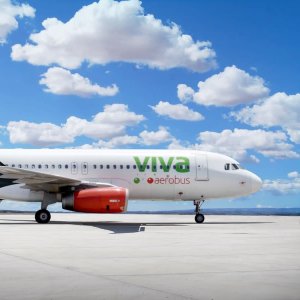
Volaris, Mexico’s ultra-low-cost carrier, has been ranked the fourth mostCO₂-efficient airline in the world—and the top in Mexico—according to emissions per available seat kilometer (ASK), a metric published in a new Cirium report. The airline recorded 57.9 grams of CO₂ per ASK, trailing only Wizz Air (53.9), Frontier Airlines (54.4), and Pegasus Airlines (57.1). Viva Aerobus also earned recognition, placing 11th with 60.7 g CO₂/ASK.
Despite the high rankings, Cirium notes that both Volaris and Viva saw increases in emissions—1.6% and 5.1% respectively—compared to 2023 levels. Cirium CMO Mike Malik warned that while these carriers excel in emissions intensity, rising passenger demand continues to drive overall emissions upward. “Even the most efficient airlines can’t fully offset demand growth through operational improvements alone,” he noted.
Volaris CEO Enrique Beltranena emphasized the significance of the ranking as proof of the airline’s commitment to sustainability, operational efficiency, and innovation. “Our business model is built around one of the youngest and most efficient fleets in the region, optimized routes, and maximizing distance flown—all with the goal of delivering affordable travel while minimizing environmental impact,” he said.
Since 2016, Volaris has reduced its CO₂ emissions and fuel use by 18%, saving nearly 99.2 million gallons of fuel and preventing 970,000 tons of CO₂ from entering the atmosphere. These achievements are credited to initiatives such as fleet renewal, operational optimization, adoption of sustainable aviation fuel (SAF), and pilot-driven digital tools.
With an average aircraft age of just 5.7 years, Volaris operates one of North America’ youngest fleets. Over half of its aircraft are Airbus A320neo and A321neo models equipped with Pratt & Whitney GTF engines, which cut fuel consumption by 20% and noise emissions by 50% compared to previous generations. Additionally, 88% of its aircraft feature sharklets to improve aerodynamics and fuel efficiency.
The airline has also made notable advances in cabin and ground efficiency. Sixteen percent of its planes feature lightweight Recaro seats, while service trolleys have been swapped for lighter models. Auxiliary power unit use averages just 36.5 minutes per flight. Volaris’ point-to-point route model also contributes to fuel savings by minimizing layovers and maximizing direct flight paths.
In terms of digital transformation, the airline rolled out StorkJet’s FlyGuide tool for pilots, leveraging flight data to enhance fuel-saving procedures during climb, cruise, and descent. After just one year, the system helped reduce fuel consumption by 3,823 tons, or roughly 33.7 kg per flight, and increased the successful implementation of fuel-efficient procedures from 70% to over 80%.
On the sustainable fuel front, Volaris became the first Mexican airline to operate a flight with SAF in August 2022 using an A320neo. In 2023, it joined a US$50 million investment group led by CleanJoule to accelerate SAF production and secured access to 30 million gallons of biofuel made from agricultural and organic waste.
All these efforts support Volaris’ alignment with the IATA Fly Net Zero initiative and its goal of reducing Scope 1 CO₂ emissions intensity by over 35.4% by 2030, based on 2015 levels.
You May Like





Most popular








