


Viva Aerobus, Volaris to Navigate Two-Year P&W Engine Review
 By Reneé Lerma | Journalist & Industry Analyst -
Mon, 08/26/2024 - 09:24
By Reneé Lerma | Journalist & Industry Analyst -
Mon, 08/26/2024 - 09:24
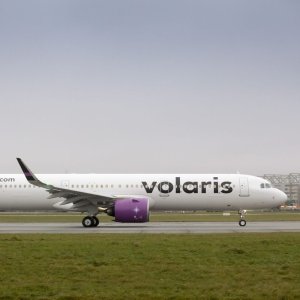
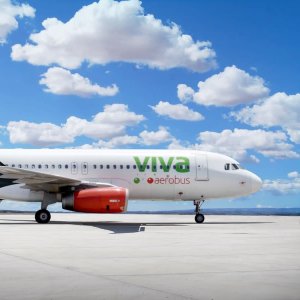
Viva Aerobus and Volaris are set to grapple with challenges related to the ongoing review of their Pratt & Whitney (P&W) engines, a process that could extend for up to two more years, according to airline executives.
Pratt & Whitney GTF engines have encountered accelerated inspection and maintenance schedules due to defects in their metallic components, resulting in unexpected costs and operational setbacks. This has led to a growing number of grounded aircraft, increasing from three in the first quarter to six in the second quarter.
During the first half of 2024, Volaris had between 30 and 34 aircraft grounded at any given time. “The number of grounded aircraft varies as engines are cycled in and out, and this process will likely take about two years,” said Enrique Beltranena, President and CEO, Volaris.
Juan Carlos Zuazua, CEO, Viva Aerobus, reported that the airline currently has 21 aircraft grounded due to the engine review. Zuazua acknowledged that the review could continue through 2025 and expressed optimism that it would be resolved by 2026. “As airlines, we are entirely dependent on the manufacturer for updates on when the turbines will be returned,” he said.
Zuazua also noted that Viva Aerobus would continue using wet leases to mitigate the impact of grounded aircraft, though he hopes to reduce reliance on this arrangement depending on the manufacturer’s progress.
Volaris has chosen not to pursue wet leasing, as previously reported by Mexico Business News. Beltranena highlighted that although 30 to 34 aircraft are grounded, the overall capacity reduction has been managed between 12% and 14% through a mitigation plan. “Wet leasing depends on affordability, and we are not currently in a position to utilize it,” Beltranena said. Instead, Volaris has focused on acquiring new Airbus aircraft and additional engines as part of their strategy.
Regarding passenger traffic, Viva Aerobus reported a 12.6% increase, with 15.47 million passengers from January to July 2024, compared to 13.73 million during the same period last year. In contrast, Volaris experienced a 14.9% decrease, carrying 16.70 million passengers in the same period, down from 19.62 million. Combined, the two airlines transported 32.16 million passengers in the first seven months of the year, a 3.57% decline from the 33.35 million passengers during the same period in 2023.
You May Like






Most popular








