


Viva, Volaris See 1H25 Revenue Drop; Earnings Down 23.7%
 By Teresa De Alba | Jr Journalist & Industry Analyst -
Wed, 08/06/2025 - 16:46
By Teresa De Alba | Jr Journalist & Industry Analyst -
Wed, 08/06/2025 - 16:46
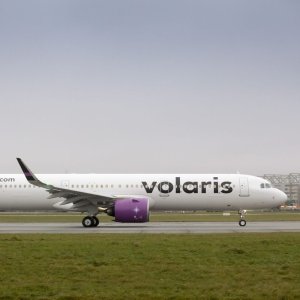
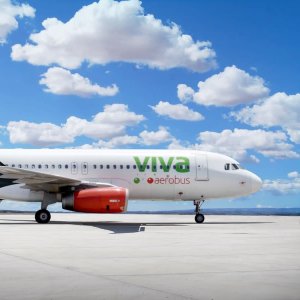
In August, Viva and Volaris reported year-to-date revenue declines for the first half of 2025. Viva posted revenue of US$1.04 billion from January to June—a 15.5% decrease from the previous year—while Volaris reported US$1.37 billion, down 8.2%, according to filings with the Mexican Stock Exchange (BMV). Combined, their total revenue dropped 23.7% compared to the same period in 2024.
Despite the decline, analysts are cautiously optimistic about a recovery in the second half. “Viva’s focus on wet leasing has supported its international expansion, while Volaris is poised for a rebound in passenger traffic through year-end,” said Alik García Álvarez, Deputy Director of Equity Analysis, Valmex Casa de Bolsa. García Álvarez noted that while engine inspections by Pratt & Whitney have grounded several aircraft, “this could ultimately benefit Volaris, allowing it to allocate more resources toward international tourism, where it trails Viva.”
Regulatory uncertainty remains a headwind for the sector. García Álvarez warned that diverging aviation policies between Mexico and the United States could limit growth, particularly if US authorities block new route approvals. He underscored the urgency of resolving slot allocation challenges at Mexico City International Airport (AICM) through bilateral dialogue. Aviation expert Carlos Torres added that Viva and Volaris—more reliant on domestic operations—are less exposed to US policy risks than Aeroméxico, which depends heavily on US-bound routes for 70–80% of its international traffic.
Volaris posted a net loss of US$63 million in 2Q25, with EBITDA falling 13% and revenue down 11.7%. Still, CEO Enrique Beltranena remains confident: “We are reinstating our full-year guidance for EBITDAR margin, now projected at 32% to 33%. Our flexible model and cost discipline allow for calibrated growth aligned with market trends.” Senior analyst Brian Rodríguez Ontiveros added that volatility peaked in 2024 and anticipates Volaris will return to stability, regaining share lost to Viva. He forecast high single-digit capacity growth in H2, which could support a recovery in Volaris’s stock.
Viva, meanwhile, saw Q2 revenue decline 10.3% year-over-year to US$549 million. The airline reported an 85.8% load factor, TRASM of US$8.75, and a 9.9% drop in CASM. It achieved an EBITDAR margin of 32.8% and a net margin of 1.4%. Despite disruptions from engine inspections, Viva expanded its fleet by 12 aircraft over the past year. Rodríguez noted that Viva’s aggressive international strategy has made it the leader in cross-border traffic, even ahead of Aeroméxico. He expects both carriers to stabilize in the second half, with profitability and operational resilience in focus.
You May Like






Most popular








