


Mexico’s Taruk E-Bus Draws New Orders, US Interest
 By Óscar Goytia | Journalist & Industry Analyst -
Tue, 11/18/2025 - 14:13
By Óscar Goytia | Journalist & Industry Analyst -
Tue, 11/18/2025 - 14:13
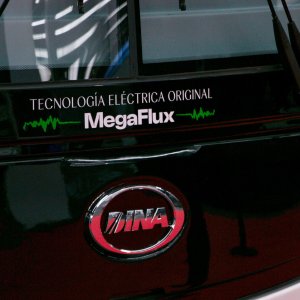
Mexico’s first fully domestic electric bus, Taruk, is moving into large-scale deployment as multiple cities advance fleet-renewal plans and new inquiries emerge from the US market. Developed by Megaflux and assembled with Dina under Grupo PEO, the vehicle is already tied to upcoming deliveries of 66 units in Chetumal, ongoing negotiations for 800 units in 18 cities, and what company representatives described as an unsolicited expression of interest for 10,000 units from California. Taruk’s early performance in Mexico City and other test routes has positioned the project at the center of national electrification and local-content strategies.
“There are very strategic projects for the long term in cities like Chetumal. With these 66 units, the entire public transport system of the city changes, and that is something we like to see,” said Altagracia Gómez, President, Grupo PEO and head of the Council for Regional Economic Development and Nearshoring (CADERR).
Taruk’s development began as a technical collaboration between Megaflux and Dina, evolving into a project aligned with national industrial goals. The vehicle’s powertrain is produced in Iztapalapa, and final assembly takes place in Ciudad Sahagún. Initial tests on Mexico City’s Route 46 accelerated procurement decisions in other regions as transportation authorities evaluated locally built, zero-emission options.
Gómez emphasized that the program supports a shift toward deeper domestic value creation. “We have to start adding more value. In the next three, six, 10 years, Mexico can make that leap and not only be the largest producer and exporter, but the largest designer,” she said, adding that Mexico maintains cost and regional-content advantages.

The project originated from early conversations between Megaflux CEO Roberto Gottfried and Dina’s leadership. Gottfried said the partnership formed around a shared commitment to build a fully Mexican system. “They have been our friends and partners throughout the entire process, and it could not have been otherwise, because only with Dina and Megaflux could we achieve a technological product that was 100% Mexican,” he said. He added that the decision to proceed happened quickly: “From the day I sat down in a café with Ararggo Gómez to explain the project and he told me he was in, it has been simple and based on firm commitments.”
Megaflux and Dina are now developing 6-, 8-, and 12-meter variants to complement the current 9.5-meter model. Taruk’s expanding role has shifted internal priorities at Grupo PEO, where the bus now connects manufacturing, urban mobility planning, public policy coordination, and energy-transition initiatives.
Designed for high-mileage urban routes, Taruk can operate up to 350 km per day—or around 250 km with air conditioning running for more than 12 hours—using a 287-kW battery. It has capacity for 60 passengers, accessibility features, and adaptations for coastal climates. After more than 40,000 km of testing, Megaflux reports operating costs that are seven to eight-and-a-half times lower than diesel units.
“This bus has a high level of sovereignty because it does not depend on bringing components from abroad to assemble and build it,” Gottfried said.
Despite international interest, Gómez said the company will scale cautiously. “We feel more comfortable with fleets between 50 and 100 units,” she said. Grupo PEO expects to deliver up to 200 new buses next year and expand its dedicated workforce from 150 to about 350 employees.
You May Like





Most popular








