


Trump's Tariffs to Affect the Energy Sector
 By Perla Velasco | Journalist & Industry Analyst -
Thu, 11/28/2024 - 13:27
By Perla Velasco | Journalist & Industry Analyst -
Thu, 11/28/2024 - 13:27
President-elect Donald Trump announced plans to impose substantial tariffs on goods from Mexico, Canada, and China as part of his administration's first-day initiatives. This policy aims to address illegal immigration and drug trafficking, particularly fentanyl, which Trump cites as significant issues for the United States. However, this policy could substantially increase costs for American businesses and consumers, and ultimately alter relationships potentially hurting businesses, according to Mexico’s president Claudia Sheinbaum.
“On January 20th, as one of my many first Executive Orders, I will sign all necessary documents to charge Mexico and Canada a 25% tariff on ALL products coming into the United States,” Trump posted on his Truth Social platform. “This Tariff will remain in effect until such time as Drugs, in particular Fentanyl, and all Illegal Aliens stop this Invasion of our Country!”
President Claudia Sheinbaum responded, stating that "neither threats nor tariffs will solve the issue of migration or drug consumption," and warning that retaliatory tariffs could endanger shared economic interests. Canadian officials emphasized their commitment to border security and the country’s critical role in US energy supply.
The proposed tariffs, particularly on imports from Canada and Mexico, could significantly affect the energy sector. Canada and Mexico are the top suppliers of energy-related goods to the US, with Canada providing 48.5% (US$126.8 billion) and Mexico 9.3% (US$24.3 billion) of the total energy imports in 2023, according to the US International Trade Commission.
In natural gas, the United States imported about 8.5Bcfd from Canada and Mexico during the first eight months of 2024, with most imports (8.4Bcfd) coming via pipelines from Canada. The remaining imports included small quantities from Mexico, liquefied natural gas (LNG) from Canada and Trinidad and Tobago, and compressed natural gas (CNG) from Canada. The US exported about 20.8Bcfd of gas during the same period, with 2.7Bcfd going to Canada and 6.4Bcfd to Mexico via pipelines, and the rest as LNG to various countries.
Experts warn that tariffs on energy commodities could disrupt closely intertwined energy systems between the US and its neighbors. However, analysts remain skeptical of the materialization of tariffs covering commodities given the intertwined economies. Additionally, retaliatory tariffs would have a negative impact due to the dependence of Mexico from the US natural gas and refined fuels.
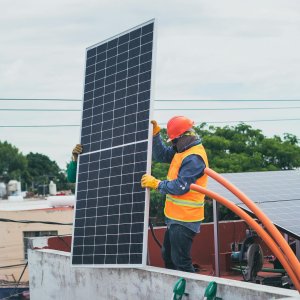
In addition to the energy sector, tariffs could increase the United States’ dependence on China for certain metals, crucial for the electricity sector, the transition energy, and many other industries. The solar sector, however, may see limited impact since most solar modules and cell imports come from Southeast Asia, not specifically from China nor Mexico.
You May Like




Most popular








