

Agriculture: Innovation for a Better Future




STORY INLINE POST








 By Laura Tamayo | Director of Public Affairs, Communication and Sustainability -
Wed, 06/05/2024 - 10:00
By Laura Tamayo | Director of Public Affairs, Communication and Sustainability -
Wed, 06/05/2024 - 10:00
It’s a fact: The future of food and agriculture is surrounded by uncertainties, questions and concerns about performance and sustainability. These uncertainties stem from various factors, such as demographic growth, income distribution, the state of natural resources, climate change and the sustainability of peace.
Fortunately, today, agriculture has evolved, and technology together with innovation have acquired a crucial role in presenting proposals that address current challenges, like feeding an ever-growing world population without increasing deforestation to create more areas for cultivation.
In this regard, the Food and Agriculture Organization of the United Nations (FAO) estimates that food production will need to increase by 70% by 2050. FAO considers that, in order to feed the population in 2050, challenges such as using technology to produce more with fewer resources, reducing food waste in developed countries and optimizing resources must be achieved.
Today, therefore, the tools available to farmers are essential to obtain good yields from their land and thus make a profitable investment, while preserving and restoring the land. Around the world, we find remarkable examples of advanced agricultural technology, such as high-pressure irrigation systems, improved seeds, high-quality plants, automated machinery, biotechnology, drip irrigation and data monitoring systems, which are helping to overcome these challenges.
One potentially effective response is the development of climate-adapted seeds, which are crucial to ensure food availability. Prominent examples include corn varieties that are more resistant to water stress in Mexico and flood-resistant rice in Asia. The various technologies used in plant breeding, from traditional breeding to gene editing, provide powerful tools for improving crop resilience and productivity in the face of climate change.
The use of crop protection products is also essential, as they not only help mitigate damage caused by pests and diseases that can decimate crops, but also optimize productivity by ensuring that crops are resilient and healthy, as well as reducing the need for large amounts of water.
While it is critical to address legitimate human health and environmental concerns, it is also crucial to consider the economic and social implications. It is time to focus on issues relevant to the comprehensive and sustainable development of agriculture, without neglecting the safety and health of those who produce and consume the food; doing so ensures economic viability and food security for future generations.
Integrating approaches such as regenerative agriculture is equally crucial. This production model not only has a positive impact on the environment, but also promotes the revitalization of natural resources essential to agriculture. It is about producing more with fewer resources while restoring nature.
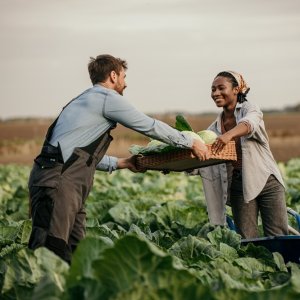
It is essential to ensure equitable distribution that also benefits smallholder farmers. Smallholder farmers often lack the financial and technical resources to adopt advanced technologies or implement more sustainable agricultural practices. However, it is crucial to ensure that they can also take advantage of advances in climate-resilient agriculture.
From my point of view, it is crucial to move forward in four key areas to involve small farmers in these solutions:
-
Develop public programs and policies that facilitate small and medium-sized agricultural producers' access to genetic improvement technologies and sustainable practices. This could be achieved through financial and technical incentives, such as subsidies for the purchase of climate-adapted seeds or technical assistance for the implementation of regenerative agriculture practices.
-
Provide customized training and technical assistance to farmers so that they understand how to integrate these new crop varieties and sustainable practices into their existing farming systems. This involves transferring knowledge on the appropriate use of technologies and practices, as well as training in business management and farm planning to improve efficiency and profitability.
-
Encourage collaboration between the public sector, the private sector and civil society organizations to develop solutions that are specific and tailored to the needs of smallholder farmers. This could include the creation of public-private partnerships to provide technical assistance services and access to affordable agricultural inputs, as well as the establishment of farmer-to-farmer support networks to share knowledge and best practices.
-
Ensuring that smallholder farmers have equitable access to these innovations and resources will not only strengthen their capacity to meet the challenges of climate change but will also contribute to improving their long-term livelihoods and resilience.
Let's remember that our existence depends on a single planet; therefore, it is imperative to adopt inclusive and sustainable approaches to protect our natural resources and ensure food security and well-being for generations to come. Embracing sustainable agricultural practices, investing in renewable energy, and promoting biodiversity are crucial steps we must take to mitigate the impacts of climate change and preserve the delicate balance of our ecosystems. These efforts require a collective commitment from governments, industries, and individuals to transition toward a more sustainable and equitable future, hand in hand with education and awareness, because they play a vital role in driving this change.
You May Like



Most popular








