

Technology, Innovation and their Role in Boosting Quality of Life




STORY INLINE POST








 By Laura Tamayo | Director of Public Affairs, Communication and Sustainability -
Tue, 08/15/2023 - 14:00
By Laura Tamayo | Director of Public Affairs, Communication and Sustainability -
Tue, 08/15/2023 - 14:00
Technology and innovation are experiencing exponential growth, revolutionizing our way of life and expanding the boundaries of what is possible. In the current era, an increasing number of people have access to advanced technological devices, and global connectivity has become the norm. This constant acceleration has led to unprecedented advances in fields like artificial intelligence, robotics, virtual and augmented reality, precision medicine, and renewable energy, to name just a few examples.
As technology progresses, innovations feed off each other and are mutually reinforced, creating a virtuous circle of growth and continuous improvement. In this exciting context, research and development (R&D) has become a powerful tool to address global challenges and contribute to the fulfillment of the UN Sustainable Development Goals 2030 (SDGs).
R&D can drive advances in renewable energies, energy efficiency, sustainable transportation, and access to basic services, such as education and health. Additionally, it can generate new inclusive business models, empower local communities, and promote citizen participation in decision-making.
Therefore, it is crucial to foster an environment conducive to innovation, to enable organizations and entrepreneurs to thrive. This involves creating policies and regulations that promote the research and development of sustainable technologies, as well as investing in infrastructure and digital skills training. By incentivizing the creation of these ecosystems, opportunities are created for the generation of ideas and collaboration among different actors, stimulating the building of solutions that effectively address the SDGs.
In this regard, I would like to highlight two specific examples where technology and scientific research play a fundamental role in the pursuit of sustainable development goals: agriculture and medicine.
Transformation of Agriculture
Climate change is dramatically affecting arable land and endangering the livelihoods of numerous farmers. Furthermore, the global population is projected to reach 10 billion by 2050. In the face of this scenario, a challenging question arises: How can farmers increase food production with less land availability, reduce their dependence on the current system, and tackle increasingly frequent challenges, such as droughts, heatwaves, and floods?
With the availability of the latest technological tools, a new transformation in agriculture is quietly taking place, focusing on two aspects:
Digital Agriculture. Technology is changing the face of agriculture by helping producers make the most of their fields while minimizing environmental impact. It is no longer uncommon to see drones, sensors, GPS-guided tractors, and producers managing their plots with digital applications in crops. These tools lead the agribusiness sector to perform with increasing production efficiency and environmental sustainability, contributing to the reduction of fuels and inputs.
New and Improved Crops. The application of genetic editing technology in agriculture will become increasingly common due to its speed and precision in developing desirable characteristics in crops. The upcoming years of agricultural research and innovation will have a huge impact on the long-term health of our global food system, making it possible to improve the resilience, durability, and quality of the global food supply.
From Science to Action
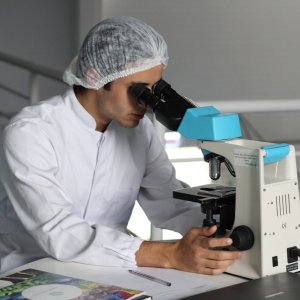
Research and development play a crucial role in advancing global health improvement. It can range from basic research in laboratories to clinical trials in humans and has a significant impact on the prevention, diagnosis, treatment, and cure of diseases.
Likewise, medical R&D is essential for the discovery and development of innovative drugs and advanced therapies. Through thorough research, new molecules, gene therapies, cell therapies, and specific treatments for diseases can be identified. These advances allow for the improvement of treatment efficacy and safety, as well as the tackling of previously incurable diseases.
Recently, the company BlueRock Therapeutics announced that it is working on a new stem cell therapy that could restore full functionality to patients with Parkinson's disease. This therapy, also known as BRT-DA01, is the first to show positive results in a Phase I study and involves obtaining dopamine-producing neurons derived from pluripotent stem cells (early-stage cells that can develop into any specialized tissue). When these cells are surgically transplanted into the brain of a person with Parkinson's disease, they have the potential to reshape the neural networks that have been destroyed by the disease, offering hope for restoring the motor and non-motor function of patients.
This example demonstrates that by driving the discovery of new drugs, improving
, fostering innovation in medical devices, promoting disease prevention, and advancing toward personalized medicine, we can directly contribute to improving people's quality of life, reducing the burden of diseases, and moving toward a more efficient and sustainable healthcare system.
However, we must not overlook the potential challenges and inequalities that can arise as we embrace the opportunities that technology offers. As we move toward a more digitalized society, we must ensure that all individuals, especially marginalized communities, have access to and the ability to fully leverage the advantages of these technologies. The digital divide must be bridged, ensuring that no one is left behind on this journey toward a sustainable future. Let's work together to make it possible.
You May Like




Most popular








