

Stories That Move With the City



STORY INLINE POST






 By Konstantinos Panagiotou | CEO -
Tue, 11/11/2025 - 08:00
By Konstantinos Panagiotou | CEO -
Tue, 11/11/2025 - 08:00
Moving people has always been one of the greatest challenges for major cities. But beyond building infrastructure or deploying vehicles, the real challenge lies in connecting opportunities. Every kilometer of well-planned public transport brings thousands of people closer to their jobs, their children’s schools, or their first client of the day. When designed with vision, mobility becomes a transformative force for economic and social development.
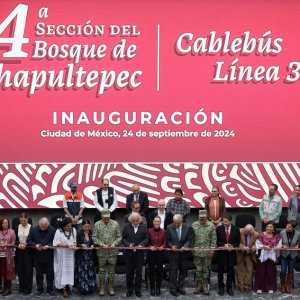
In recent years, Mexico City has made a firm commitment to more integrated and sustainable mobility. According to data from the city government itself, over MX$80 billion (US$4.3 billion) has been invested in projects that directly benefit 70% of the population, including the expansion of the public transport system, new Cablebús lines, and improved connectivity. This investment not only reduces travel times but also transforms entire economic dynamics in areas that were once disconnected or underserved.
Visiting these areas helps reveal what such projects truly mean for people’s daily lives. On one of my visits, I met a woman who sells quesadillas near a Cablebús station. She told me that before, she would set up her stand around nine in the morning and close by noon because there weren’t many people passing by afterward. Since the line began operating in that area, she now works all day, has doubled her income, and even hired help for her business. Her story is just one among thousands, but it clearly illustrates how mobility can become a genuine driver of local growth.
It’s not only about moving people, it’s about moving the economy. Each trip represents a potential transaction: a customer arriving, an employee showing up for work, a student reaching class without wasting hours in traffic. According to the Mexican Institute of Transport, every peso invested in efficiently planned public transport can generate up to four pesos in indirect economic benefits, such as higher productivity, reduced idle time, and increased activity in local businesses.
The impact multiplies when transport is safe, efficient, and dignified. People are more confident to go out, work, study, and start businesses. Companies find a more punctual and motivated workforce, and local communities grow stronger as commercial activity increases. Mobility, when well-conceived, not only shortens distances, it broadens horizons.
Modern mobility can no longer be measured solely in kilometers built or passengers carried, but in the well-being it generates. Every minute saved in transit is a minute gained for life. And every peso invested in public transportation is a boost to national productivity. Cities that understand this equation achieve more balanced growth, with less territorial inequality and greater shared opportunity.
When transportation systems work, the country moves forward, businesses grow, communities strengthen, and quality of life rises. Mobility is far more than infrastructure, It is the invisible foundation that supports productivity, competitiveness, and social cohesion.
A country that moves its people well is a country that moves forward. In every station, along every route, a story is transformed. And behind every daily journey lies a fulfilled promise: that progress can reach every corner.
You May Like

Most popular








