


SICT’s Transport Boost, Mayan Train Losses, Global Cargo Growth
 By Adriana Alarcón | Journalist & Industry Analyst -
Fri, 06/13/2025 - 11:20
By Adriana Alarcón | Journalist & Industry Analyst -
Fri, 06/13/2025 - 11:20
This week in logistics, the Ministry of Infrastructure, Communications, and Transportation (SICT) is rolling out a national transport strategy with major airport upgrades and freight enhancements, while the Mayan Train project continues to drain public funds amid low ridership.
In other news, Shanghai is expanding its global cargo reach with new stations in Mexico and Ethiopia, as CEVA Logistics strengthens vehicle shipping links between Asia and Latin America.
Ready for more? Here is your Week in Logistics!
Mexico Unveils Transport Plan to Boost Logistics, Airports
The SICT has unveiled a National Infrastructure and Transport Plan to boost logistics, road safety, and airport expansion. Key actions include strengthening the freight sector, enhancing driver training (including English courses for cross-border operations), improving cargo security, and investing MX$126.6 billion (US$$6.61 billion) to upgrade 62 airports.
Mayan Train Faces Deep Losses, Mounting Public Costs
The Mayan Train faces major financial strain, with MX$40.8 billion (US$$2.13 billion) in subsidies and low passenger demand averaging just over 2,000 daily riders. Freight operations — still inactive — are seen as key to long-term viability. Costs remain opaque, while massive budget overruns have heavily impacted the Tourism and Defense ministries, making the project a major driver of federal spending increases.
Shanghai Expands Cargo Network to Mexico, Ethiopia
Shanghai Airport will open overseas cargo stations in Ethiopia and Mexico to boost its role as a global air cargo hub. In partnership with Ethiopian Airlines and Lufthansa Cargo, the initiative aims to enhance global supply chain connectivity and support China’s dual circulation strategy. The Ethiopia station will handle 600,000t annually, while Mexico’s will handle 100,000t.
CEVA Expands RORO Fleet with New Trade Lane
CEVA Logistics has expanded its finished vehicle logistics operations by adding a new regular trade lane and spot services between the Far East and Latin America. With three new RORO vessels, CEVA now offers more reliable and flexible shipping of vehicles and equipment across key markets, strengthening its global presence, supporting rising demand in Latin America, and enhancing end-to-end logistics from factory to dealer.
APM Terminals Boosts Lazaro Cardenas Port With Electric Cranes
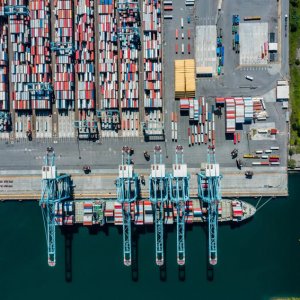
APM Terminals Lazaro Cardenas has received six electric automated cranes as part of its Phase II expansion, set for 2026. This US$165 million investment aims to double the terminal’s capacity to 2.2 million TEUs, enhance cargo handling efficiency, and reduce emissions. The initiative supports Mexico’s infrastructure and sustainability goals, positioning the port as a key global logistics hub.
Freightos, Forward Expand Digital Trucking Integration
Freightos has expanded its partnership with Forward Air to enable instant digital booking of LTL and linehaul trucking services via the 7LFreight by WebCargo platform. This integration provides freight forwarders with access to Forward’s extensive US network and supports Freightos’ goal of delivering seamless, end-to-end digital logistics across air, ocean, and ground transport.
Mexico City Launches New Trolleybus Line for Sustainable Mobility
Mexico City’s Electric Transport Service (STE) has launched Trolleybus Line 13, a 29.9km route connecting Constitucion de 1917 and Mixcoac through 41 stops across Iztapalapa, Benito Juarez, and Coyoacan. Operating with 46 modern trolleybuses, the line aims to serve 36,000 passengers daily and enhance connectivity with multiple transit systems. It runs daily from 5 AM to midnight.
You May Like


Most popular








