

Electric Mobility Remains the Future: Bosch




STORY INLINE POST




 By Teresa De Alba | Jr Journalist & Industry Analyst -
Tue, 07/15/2025 - 17:46
By Teresa De Alba | Jr Journalist & Industry Analyst -
Tue, 07/15/2025 - 17:46
Q: Given the economic and political climate, many automakers are postponing EV plant plans. Does Bosch still view electric mobility as the future of the industry?
A: Electric mobility remains the future. However, the transition timeline is extending. Bosch is a market leader in EV components, especially in China, where adoption is progressing rapidly and EVs account for 50% of new sales in metropolitan areas. In the European Union and North America, adoption is slower, primarily due to limited infrastructure and lower consumer demand. Market readiness, not industry capability, is the limiting factor.
About 5 million EVs globally operate with Bosch components. Given the annual production of around 90 million vehicles worldwide, the transition remains in its early phase.
Q: How are suppliers like Bosch driving electrification and technology development?
A: Electrification involves three core segments. The first is batteries, a segment dominated by Asian companies due to the high capital investment and extended ramp-up periods required to enter the market. The second is powertrains, where Bosch is a leading player in the development of e-axles. This area continues to be a strong Tier 1 supplier domain, as large-scale production remains more efficient through external partnerships rather than in-house manufacturing. The third segment is generic components, such as brakes, comfort electronics, and wiper systems, which Bosch supplies to leading global electric vehicle manufacturers.
Q: How does Bosch align with various OEMs on EV powertrain development, given the different architectures?
A: Alignment is complex. Each OEM has its own EV platform, which makes sourcing less efficient. In China, standardization through shared platforms creates supplier synergies and cost advantages. For lower production volumes, collaboration with Tier 1 suppliers remains the most viable model.
Q: What investments has Bosch made in Mexico in recent years?
A: Over the past three years, Bosch has invested about US$1.2 billion in Mexico. In addition, last year we inaugurated a new refrigerator manufacturing plant in Monterrey, which involved an investment exceeding US$200 million. We also made a similar-sized investment in Aguascalientes to establish a specialized line for integrated braking systems, which also surpassed US$200 million.
Q: What actions is Bosch taking to prepare for trade uncertainty and tariffs in North America?
A: Naturally, conditions were more favorable before tariffs became a central issue in trade discussions. While it is not possible to predict US trade decisions, Bosch works to remain compliant with the USMCA, and the majority of our products meet its regulatory requirements. Our operations remain stable because we comply with USMCA provisions.
Q: Where does Mexico rank in Bosch’s global manufacturing network?
A: Mexico represents a strategic location for Bosch, with around 20,000 employees across 16 sites. While China, with over 50,000 associates, continues to receive strong investment in research and development – approximately 1.5 billion euros in the past year – the shift toward relocation and nearshoring has significantly increased Mexico’s relevance in Bosch’s global strategy.
Mexico offers competitive labor, supplier ecosystems, and infrastructure. Unless extreme tariffs are introduced, it will remain a strong manufacturing base.
Q: What are the main advantages and challenges of manufacturing in Mexico?
A: Operating a production plant in Mexico brings significant advantages. Bosch ranks as the fifth most attractive employer in the country, and that strong reputation supports our ability to attract talent.
One of the key challenges, however, is employee turnover. However, our experience shows that if employees remain with the company for more than six months, they tend to stay longer-term. The issue is primarily with short-term attrition. To address this, motivation and engagement are critical. One of the most effective strategies we have is implementing dual education programs based on the German model. This approach combines academic instruction with practical training and helps build a more qualified workforce. We see an increasing need for such qualification programs in Mexico, as many operators still enter the labor market without formal education. Enhancing vocational training is essential for long-term industrial competitiveness.
Q: What skills are most in demand at Bosch Mexico? What does the company seek in new graduates and professionals?
A: Digitalization is a key priority. While most individuals use smartphones, Bosch requires professionals who can apply advanced technologies such as AI in an intelligent and practical way, particularly in production environments. For example, we are integrating AI into visual inspections for electronic control units. This replaces manual, repetitive tasks with automated systems that are both more reliable and efficient. Additionally, this enhances job quality, as inspecting components manually for eight hours is both monotonous and physically demanding.
Q: How does the Mexcellence Program help Bosch meet its talent needs?
A: The Mexcellence Program is not only focused on identifying top-tier talent, but also on creating educational and career opportunities for students from economically disadvantaged backgrounds. While institutions such as Tecnológico de Monterrey are well-regarded, we have found that students from public universities and underserved regions also demonstrate a high level of motivation and eagerness to learn. Education provides them with life-changing opportunities. The program focuses primarily on STEM careers but also includes commercial disciplines.
Q: How will Bosch achieve its target to grow between 6% and 8% annually by 2030?
A: We are advancing according to plan, but the future remains unpredictable. Given the current volatility, we aim to repeat our historical performance, as we have achieved consistent annual growth of 6%. Although we are experiencing turbulence, we believe these challenges will eventually stabilize.
Q: How are international trade challenges affecting Bosch’s operations?
A: The business environment has been difficult. Geopolitical tensions and ongoing tariff conflicts remain unresolved. Additionally, the upcoming 2026 USMCA review creates further uncertainty. On a broader scale, global conflicts such as those in Ukraine and Gaza continue to complicate international business conditions. It is more turbulent than originally anticipated, although Bosch is maintaining its position reasonably well.
Q: How are automotive supply chains expected to evolve in North America considering this environment?
A: There is a growing shift toward local-for-local supply strategies, which is the correct direction. However, transitioning supply chains requires time, six months at a minimum. Furthermore, localization alone is not sufficient. Quality, cost, and delivery performance must all meet competitive standards. Asian suppliers remain highly competitive in these areas. Therefore, Mexican suppliers must focus on building capabilities that ensure long-term competitiveness, independent of tariff protections. Tariffs may offer temporary relief, but they are not a sustainable solution.
Q: How is Bosch working with Mexican suppliers to ensure they remain competitive amid these changes?
A: Bosch actively supports local suppliers through various initiatives. We recently participated in a supplier fair in Queretaro and will soon hold another in Monterrey, where we are expanding our manufacturing presence. Many local suppliers have had limited access to our global procurement systems, and we aim to bridge that gap by increasing regional engagement. For example, we meet suppliers in Guadalajara to outline our specific needs. Often these are not complex components, such as steel or aluminum housings, but the local supplier base is still insufficient.
We work closely with suppliers to help them build strong business cases. However, access to financing remains a major barrier. Interest rates in Mexico are high, and without a clear, reliable business case, banks are reluctant to lend. Our goal is to provide the visibility and support suppliers need to overcome that hurdle.
Q: What strategic milestones does Bosch Mexico aim to achieve in the next 12 to 18 months?
A: Our key strategic initiative is “Keep Mexico Competitive.” The objective is not only to remain fit for market conditions but to ensure competitiveness across all operational dimensions. This includes workforce capabilities, labor costs, tax structures, and energy efficiency. We are facing headwinds, in contrast to the tailwinds that supported growth in previous years. Therefore, our focus will be on intensifying our efforts to ensure that Bosch Mexico continues to play a critical role within our global manufacturing and innovation network, despite the external challenges.
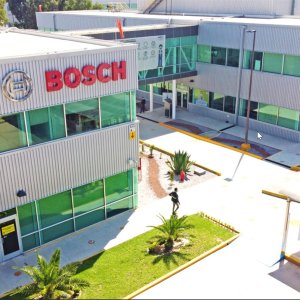
Bosch Mexico is a regional subsidiary of Robert Bosch GmbH, a global technology and services company headquartered in Germany. Active in Mexico since 1955, Bosch plays a leading role in the country's manufacturing sector, providing high-tech solutions across four business sectors – Mobility, Industrial Technology, Consumer Goods, and Energy and Building Technology
You May Like




Most popular








