

Why Gut Health Is the New Frontier in Precision Wellness




STORY INLINE POST







 By Gustavo Rodríguez Leal | Founder and CEO -
Mon, 07/21/2025 - 06:00
By Gustavo Rodríguez Leal | Founder and CEO -
Mon, 07/21/2025 - 06:00
We often hear that, “You are what you eat.” But emerging science tells us something even more powerful: You are what your microbes do with what you eat.
The human microbiome — the trillions of bacteria, viruses, fungi, and other microorganisms that live in and on our bodies — is one of the most important discoveries of 21st-century medicine. Far from being passive passengers, these microbial communities are active participants in nearly every system of the body: digestion, immunity, mood, inflammation, metabolism, and even gene expression.
I believe that understanding and optimizing the microbiome is not just a niche topic, it is a foundational pillar of scientific wellness, especially for populations in Latin America dealing with a growing burden of chronic disease.
What Is the Microbiome—and Why Does It Matter?
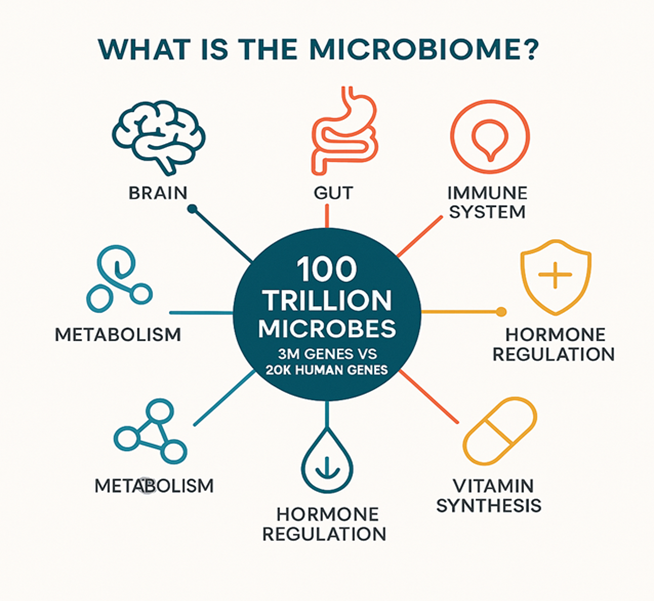
The human gut alone hosts over 100 trillion microbes, outnumbering human cells by roughly 10 to 1. This ecosystem contains over 3 million genes, compared to just 20,000 in our human genome, and produces thousands of bioactive compounds that affect the body systemically.
Research from the Human Microbiome Project and MetaHIT consortium has shown that the microbiome:
· Trains and regulates the immune system
· Synthesizes essential vitamins (B12, K2, folate)
· Modulates inflammation
· Regulates mood and cognition via the gut-brain axis
· Metabolizes complex fibers and polyphenols into anti-inflammatory compounds
· Maintains gut barrier integrity, preventing “leaky gut” and systemic inflammation
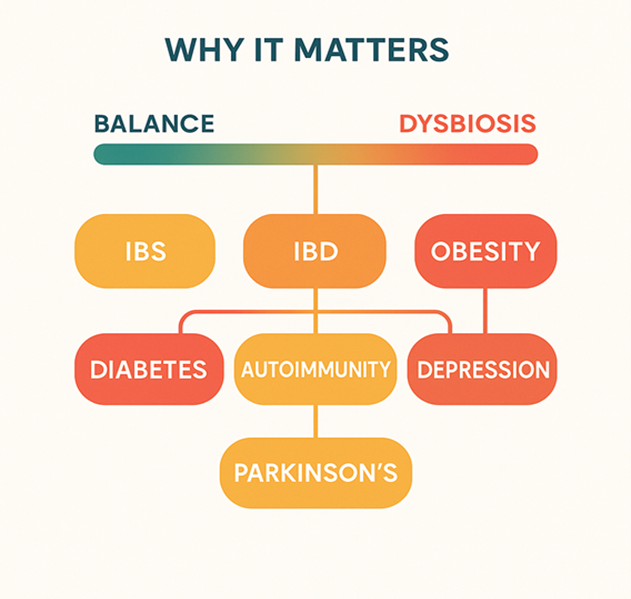
Disruptions in the microbiome — known as dysbiosis — have been linked to over 100 conditions, including:
· Irritable Bowel Syndrome (IBS) and Inflammatory Bowel Disease (IBD)
· Obesity and type 2 diabetes
· Autoimmune diseases (for example, Hashimoto’s, rheumatoid arthritis)
· Neurodegenerative disorders (such as Parkinson’s, Alzheimer’s)
· Depression, anxiety, and brain fog
The Latin American Health Context: A Silent Gut Crisis
Latin America is facing a rapid rise in chronic diseases, many of which are deeply tied to gut dysfunction and chronic inflammation.
In Mexico, 38% of adults are obese, and over 14 million live with diabetes (ENSANUT, 2022). Studies show that urban Mexican diets — high in ultra-processed foods and low in fiber — lead to reduced microbial diversity, a hallmark of poor gut health.
Other aggravating factors — antibiotic overuse, environmental toxins, chronic stress, and sedentary lifestyles — are further damaging microbial ecosystems. Yet, microbiome testing, analysis, and intervention remain largely underutilized in the region. This presents a significant opportunity for innovation in diagnostics, education, and personalized health interventions.
Scientific Evidence: What the Research Shows
A growing body of scientific literature confirms the central role of the microbiome in both disease prevention and treatment.
· A 2022 study in Nature Reviews Immunology showed that gut dysbiosis contributes to autoimmune disease by disrupting immune tolerance and increasing gut permeability.
· The American Journal of Clinical Nutrition (2023) found that higher microbial diversity, particularly levels of Akkermansia muciniphila and Faecalibacterium prausnitzii, was linked to lower systemic inflammation and improved metabolic health.
· In the ZOE PREDICT study by King’s College London, personalized diets based on microbiome profiles outperformed traditional calorie-based approaches in regulating blood glucose and triglycerides.
This research is pushing the health industry toward a new paradigm, from symptom management to root-cause resolution,with the gut microbiome as a primary therapeutic target.
The Gut-Brain Axis: Mood, Cognition, and Mental Health
The gut and brain are in constant two-way communication, connected by the vagus nerve, immune signals, and microbial metabolites, such as short-chain fatty acids (SCFAs), serotonin, and GABA.
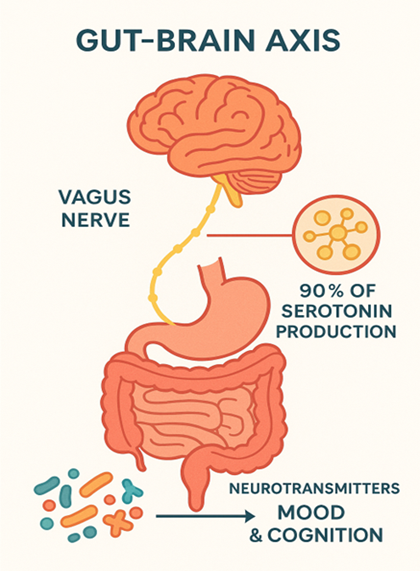
· Over 90% of serotonin — a key neurotransmitter for mood — is produced in the gut.
· Dysbiosis has been strongly associated with depression, anxiety, and cognitive decline.
· Research published in Frontiers in Psychiatry (2024) suggests that targeted probiotics and prebiotics can enhance emotional resilience and reduce inflammation-related mood disorders.
These insights are especially relevant for young, urban populations in Latin America, where mental health issues and chronic stress are on the rise.
Microbiome and Reproductive Health
At nutriADN, we are deeply focused on how the maternal microbiome affects fertility, pregnancy outcomes, and early childhood health. Disruptions in the vaginal and gut microbiomes are linked to:
· Infertility and implantation failure
· Miscarriage and preterm birth
· Gestational diabetes and preeclampsia
· Childhood allergies, asthma, and eczema
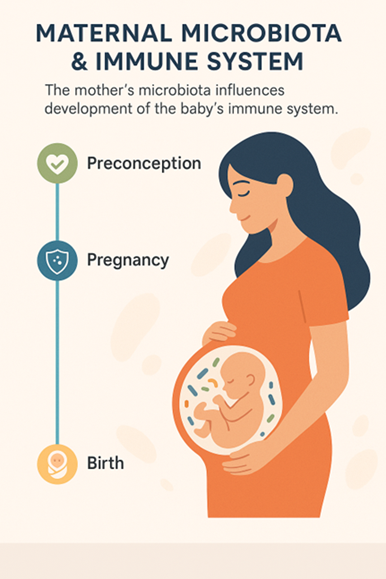
Importantly, babies inherit their first microbes from their mothers, shaping the immune system and metabolic pathways for life. A balanced maternal microbiome is one of the most important gifts we can give to the next generation.
Translating Science Into Action
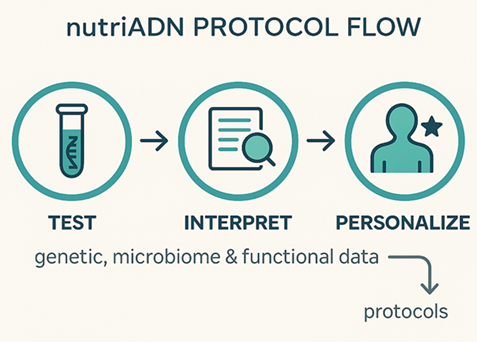
Our microbiome-focused approach at nutriADN is built around three pillars:
1. Microbiome Testing and Interpretation
We offer access to next-generation sequencing (NGS) to assess diversity, identify pathogens, and evaluate microbial metabolism.
2. Personalized Protocols
We combine microbiome insights with genetic and functional health markers to craft targeted wellness strategies:
o Precision probiotics and prebiotics
o Polyphenol-rich diets and fiber diversity
o Gut-repair nutrients like glutamine, zinc carnosine, and berberine
3. Professional Education
We train health professionals across Mexico and Latin America to understand, interpret, and apply microbiome science in clinical practice.
Market Trends and Outlook
The global gut microbiome market is expected to surpass US$1.5 billion by 2030, fueled by rising demand for personalized wellness, preventive care, and mental health innovation.
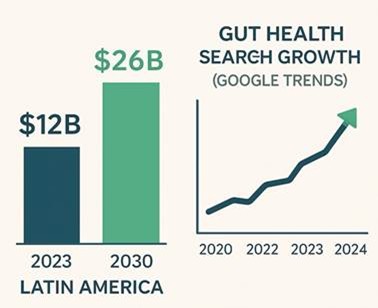
Consumer interest is booming. Google searches for “microbiome” have increased tenfold in the past five years, reflecting a surge in public curiosity. Yet, Latin America remains an underdeveloped market — one that holds extraordinary potential for direct-to-consumer testing, hybrid health platforms, and personalized supplementation models like nutriADN.
Microbiome Health Is Overall Human Health
The microbiome is not just a trend, it is a central control system for nearly every process in the body. Ignoring it is no longer an option in modern medicine.
At nutriADN and fetalADN, we are committed to building the infrastructure that will make microbiome science accessible, personalized, and impactful for individuals and families across Latin America.
By merging microbiome insights with genomics, nutrition, and functional medicine, we are paving the way for a new era of proactive, data-driven health — one that focuses not on managing disease, but on optimizing human potential.
The gut is the new frontier. And the future is personalized.
You May Like



Most popular








